Ingredients

Method
- Preheat the oven to 350°F. Lightly grease an 8×8-inch baking dish.
- If using canned peaches, drain them well. If using frozen peaches, thaw and drain them before measuring. Cut large peach slices into smaller pieces if necessary.
- Spread 1½ cups peaches evenly over the bottom of the prepared baking dish.
- In a medium mixing bowl, whisk together the granulated sugar, flour, baking powder, and salt.
- Add the milk, melted butter, and vanilla extract. Stir just until the ingredients are combined and you have a smooth batter. Avoid overmixing.
- Spoon the batter evenly over the peaches. Gently spread it toward the edges of the baking dish if necessary.
- Sprinkle the brown sugar and cinnamon evenly over the surface of the batter.
- Slowly pour ½ cup very hot water evenly over the entire dessert.
- Do not stir. The mixture will look unusually wet at this point. This is normal and is what creates the pudding sauce underneath the cake.
- Immediately place the baking dish in the preheated oven.
- Bake for approximately 30–35 minutes, or until the cake has risen and the top is lightly golden and set. The peach sauce may bubble around the edges.
- Remove from the oven and allow the pudding cake to rest for approximately 15 minutes before serving.
- Spoon warm portions into bowls, making sure to scoop some of the peaches and warm sauce from the bottom over each serving.
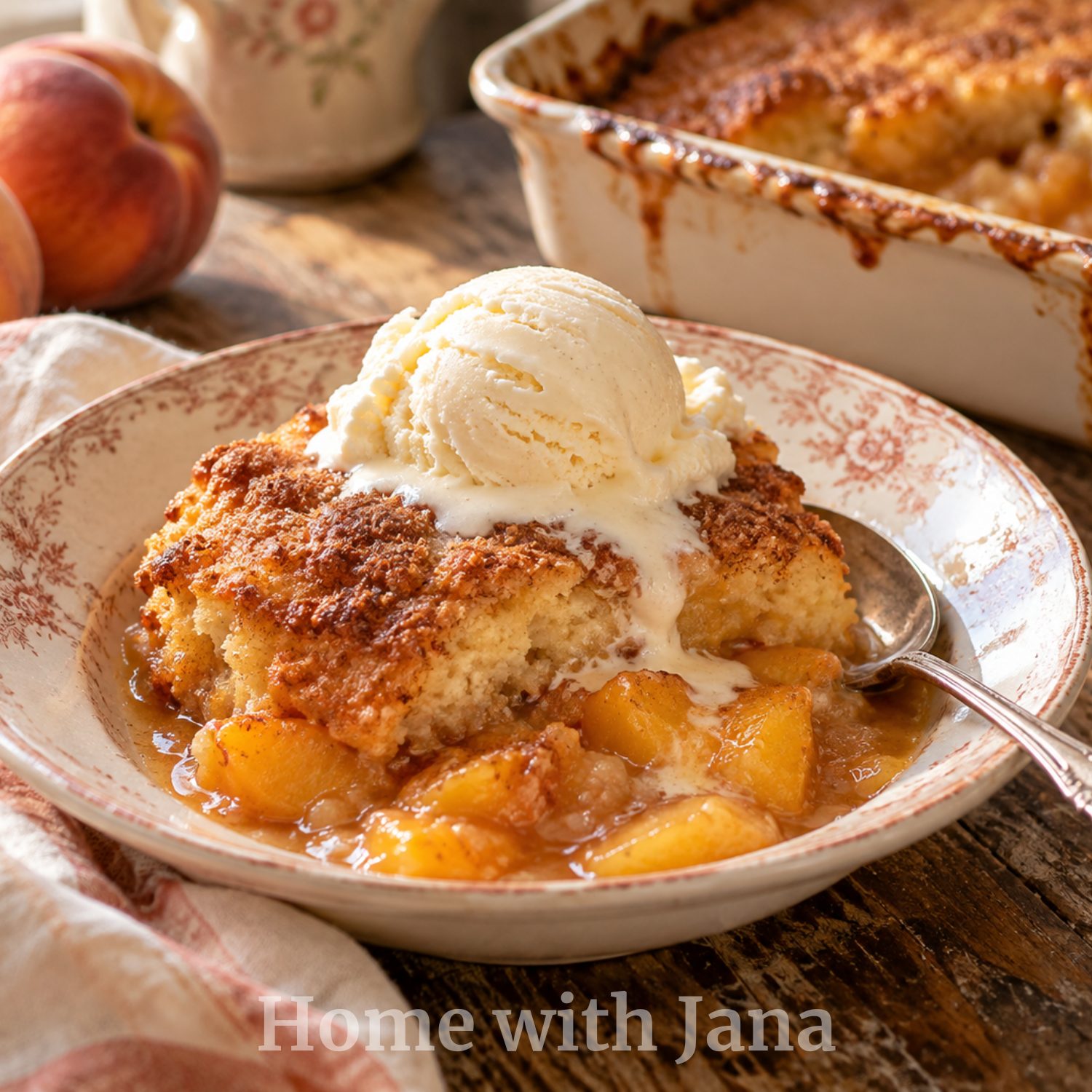
- Serve as is or top with vanilla ice cream, whipped cream, or a splash of cream.
Notes
Peaches: Canned, fresh, or frozen peaches will work. Drain canned peaches thoroughly. Thaw and drain frozen peaches before using.
Don’t stir after adding the water: This is important. The layers need to remain separate so the cake can rise while the sauce develops underneath.
Hot water: Use steaming-hot water. Freshly boiled water is fine, but it doesn’t need to be actively boiling when added.
Baking dish: An 8×8-inch baking dish works best for this amount of batter. A similar 1½- to 2-quart baking dish can also be used.
Don’t overbake: Remember that there should still be sauce underneath the cake. Don’t continue baking simply because you see liquid bubbling around the edges.
Sweetness: If using peaches packed in heavy syrup, drain them very well. The finished dessert may be slightly sweeter than when made with fresh peaches or peaches packed in juice.
Serving: This pudding cake is at its best served warm after resting for about 15 minutes.
Reheating: Microwave individual servings for 20–30 seconds, followed by 10–15 second intervals as needed.
Storage: Refrigerate covered leftovers and use within 3–4 days.
Optional flavor additions: A small pinch of nutmeg can be added with the cinnamon for a warmer spice flavor. Almond extract also pairs beautifully with peaches, but use only a tiny amount because its flavor is strong.